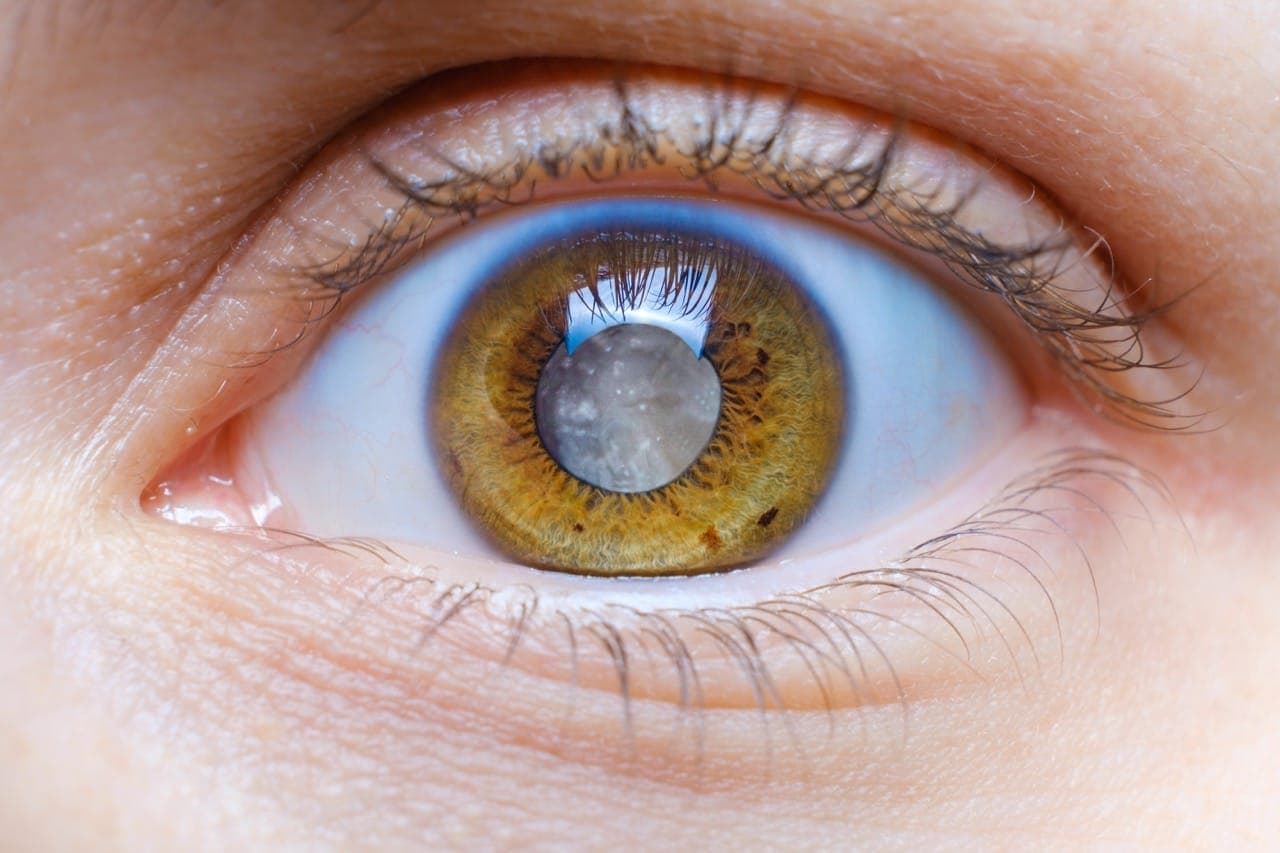
What Causes Posterior Capsule Opacification After Cataract Surgery
Posterior capsule opacification affects up to 20% of cataract surgery patients within five years. Understanding this common occurrence explains why vision may gradually blur and how YAG laser capsulotomy provides a simple, permanent solution.
Considering treatment? Speak directly with Miss Menassa.
You had cataract surgery, your vision was excellent, and then months or years later, things started to blur again. This frustrating experience has a straightforward explanation: posterior capsule opacification (PCO), sometimes called a "secondary cataract" or "after-cataract." Despite the name, your cataract has not returned—something entirely different is happening, and the solution is simple.
Understanding the Lens Capsule
During cataract surgery, the cloudy natural lens is removed but the thin, transparent capsular bag that housed it is deliberately left in place. This bag serves as a scaffold to hold the new artificial intraocular lens in the correct position. The capsule itself is a basement membrane—a thin, elastic sheet composed primarily of type IV collagen, roughly 10 to 20 microns thick—thinner than a sheet of cling film.
The surgeon creates a circular opening in the front of the capsule to access and remove the cataract. The back wall—the posterior capsule—remains intact behind the IOL, crystal clear immediately after surgery and essential for maintaining the lens in its correct anatomical position.
Why the Capsule Clouds Over
The lens epithelial cells that originally lined the capsular bag are not entirely removed during cataract surgery—some residual cells inevitably remain at the capsule equator. These cells retain the ability to proliferate and migrate across the posterior capsule surface. Over time, they form a layer of fibrous or pearl-like tissue (Elschnig pearls) on the previously clear posterior capsule, scattering light before it reaches the retina.
The process is gradual, which is why PCO typically becomes noticeable months to years after surgery rather than immediately. The incidence is approximately 20% within five years of surgery, though it varies significantly with IOL design and patient age. Younger patients are more susceptible because their lens epithelial cells are more metabolically active and proliferate more readily. Modern square-edged lens designs create a physical barrier at the capsule edge that slows cell migration, reducing PCO rates compared to older round-edged designs.
Symptoms of PCO
The symptoms mimic the original cataract in many ways: gradual blurring, difficulty with glare, reduced contrast sensitivity, and sometimes a sense that your glasses prescription has changed. Reading may become difficult, and you might notice halos around lights at night. The similarity to cataract symptoms is logical—in both conditions, light is being scattered before reaching the retina. The key difference is that PCO develops after surgery, whereas cataracts develop in an unoperated eye.
Some patients initially wonder whether their surgery "did not work" or whether the cataract has "grown back." Neither is the case—the artificial lens implanted during surgery does not cloud, and cataracts cannot recur once the natural lens has been removed. PCO is a separate, predictable biological process that is straightforward to treat.
YAG Laser Capsulotomy: The Solution
Treatment is a simple outpatient procedure called YAG laser capsulotomy. A focused laser beam creates a small, precise opening in the clouded posterior capsule, restoring a clear optical pathway for light to reach the retina. The procedure takes two to three minutes, requires no anaesthesia beyond dilating drops, involves no incisions, and is painless. Most patients are aware only of clicking sounds from the laser.
Vision typically improves within hours of the procedure. The opening created by the laser is permanent—once treated, PCO does not recur in the treated area. There is no recovery period; you can resume normal activities, including driving, the same day in most cases.
Risks and Considerations
YAG capsulotomy is one of the safest procedures in ophthalmology, but like all treatments it carries small risks. A transient rise in eye pressure can occur and is managed with drops. Very rarely, retinal detachment can follow the procedure, which is why patients are advised to report any new floaters or flashing lights promptly. These risks are extremely low, and for the vast majority of patients the procedure is straightforward and life-improving.
Miss Menassa performs YAG laser capsulotomy at her Liverpool practice, and the procedure can often be completed on the same day as diagnosis. If your vision has gradually blurred after previously successful cataract surgery, PCO is the most likely explanation, and treatment is quick, safe, and effective.

Written by
Miss Menassa
Consultant Ophthalmologist & Cornea Specialist at Menassa Vision
Learn more about Miss MenassaHave Questions About This Topic?
Book a consultation with Miss Menassa to discuss your concerns and explore your options.
Understand your eyes, at your own pace
Occasional, plain-English guidance on cataract, corneal and lens conditions — written by Miss Menassa. No jargon, unsubscribe anytime.
Related Articles
Continue exploring our expert insights on eye health
Dense Cataracts: Why Complex Cases Need Specialist Surgery
Dense, mature, or white cataracts present unique surgical challenges that demand specialist expertise. Understanding why these cases differ from routine cataract surgery helps you make informed decisions about your care.
DSAEK Surgery: What It Is, Recovery, and Long-Term Results
DSAEK is a partial-thickness corneal transplant that replaces diseased endothelial cells while preserving most of your natural cornea. This guide covers the procedure, recovery timeline, and what results to expect.

The Role of Biometry in Achieving Precise Cataract Surgery Outcomes
The success of cataract surgery depends heavily on measurements taken before you enter the operating theatre. Modern biometry uses laser interferometry and AI-enhanced formulae to calculate lens power with remarkable accuracy.