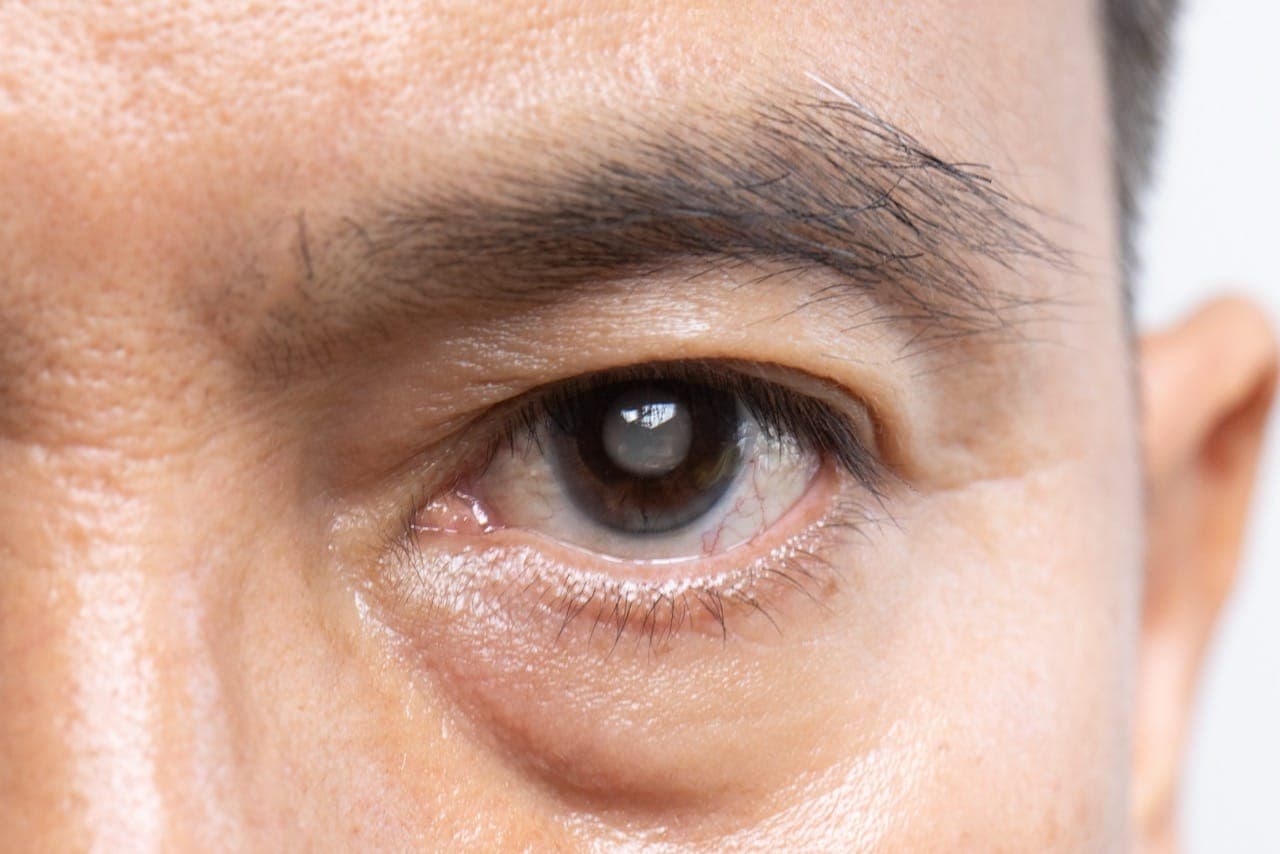
The Science Behind Meibomian Gland Dysfunction and Chronic Dry Eye
Meibomian gland dysfunction is the leading cause of dry eye disease, responsible for over 80% of cases. Understanding the oil layer of your tear film explains why standard drops alone may not resolve your symptoms.
Considering treatment? Speak directly with Miss Menassa.
Dry eye disease affects millions of people, yet many patients and even some clinicians still think of it simply as "not enough tears." In reality, the most common form—evaporative dry eye—results from dysfunction of the meibomian glands, tiny oil-producing structures within your eyelids. Understanding this distinction is crucial because the treatment for oil deficiency is fundamentally different from treatment for aqueous deficiency, and getting it wrong means prolonged suffering with inadequate relief.
The Three-Layer Tear Film
Your tear film is not a simple layer of water. It comprises three integrated layers: an inner mucin layer that helps tears adhere to the corneal surface, a middle aqueous layer providing moisture and nutrients, and an outer lipid (oil) layer produced by the meibomian glands. This lipid layer is remarkably thin—just 100 nanometres—but it performs the critical function of preventing evaporation of the aqueous layer beneath.
When the meibomian glands become blocked, inflamed, or atrophied, the lipid layer becomes deficient. Without this protective oil barrier, the aqueous layer evaporates too rapidly, leaving the corneal surface exposed and irritated. This is evaporative dry eye, and it accounts for approximately 86% of all dry eye disease. Simply adding more water-based artificial tears does not solve the problem because the fundamental issue is oil deficiency, not water deficiency.
How Meibomian Glands Fail
The meibomian glands are modified sebaceous glands embedded in the tarsal plates of both upper and lower eyelids—roughly 25 to 30 in each upper lid and 20 to 25 in each lower lid. They produce meibum, a complex lipid secretion that is expressed onto the lid margin with each blink and spreads across the tear film surface.
Dysfunction occurs through several interconnected mechanisms. The gland orifices can become obstructed by thickened, waxy meibum that solidifies rather than flowing freely. Chronic inflammation of the lid margin—blepharitis—damages gland architecture over time. Reduced blink rate, which is common during prolonged screen use, decreases the mechanical expression of meibum. Hormonal changes, particularly the reduction in androgens that occurs with ageing, reduce meibum production. Environmental factors including air conditioning, central heating, and low humidity accelerate tear evaporation.
Eventually, obstructed glands atrophy and are permanently lost. This is why early treatment matters: once glands are lost, they cannot be replaced. Meibography—imaging of the gland structure through the eyelid—can reveal the extent of gland loss and guide treatment urgency.
Symptoms Beyond Simple Dryness
Patients with MGD often describe their eyes as gritty, burning, or tired rather than specifically "dry." Paradoxically, many experience watery eyes—the corneal irritation caused by a poor tear film triggers reflex tear production from the lacrimal gland, resulting in episodes of overflow tearing. Other symptoms include fluctuating vision that temporarily clears with blinking, sensitivity to wind and air conditioning, a heavy or fatigued feeling in the eyelids, and difficulty wearing contact lenses.
These symptoms tend to worsen throughout the day, particularly with screen use, reading, or exposure to dry environments. Many patients are surprised to learn that their chronic "tiredness" or "eye strain" is actually dry eye disease rather than simply the consequence of working too hard.
Evidence-Based Treatment
Effective MGD management targets the root cause: restoring meibomian gland function. Warm compresses applied to closed eyelids for 10 minutes soften solidified meibum, allowing blocked glands to express. The compress must reach 40-45°C at the lid surface to be effective—a warm flannel cools too quickly, so purpose-designed microwaveable eye masks are recommended. Lid massage immediately afterwards helps empty the glands mechanically.
Lid hygiene with dedicated cleansing products reduces bacterial colonisation and inflammation along the lid margin. For moderate to severe MGD, anti-inflammatory treatments such as short courses of topical azithromycin or low-dose oral doxycycline can reduce gland inflammation and improve meibum quality. Omega-3 fatty acid supplementation has shown benefit in clinical trials for improving tear film stability and meibum composition.
The Role of Professional Assessment
At Menassa Vision, dry eye assessment is integral to every consultation—particularly before cataract surgery, where an unstable tear film can compromise surgical measurements and outcomes. Miss Menassa's thorough approach, including meibography and tear film analysis, ensures the ocular surface is optimised before, during, and after any surgical intervention. In-clinic treatments including therapeutic gland expression can restore function more rapidly than home care alone, and early intervention preserves glands that might otherwise be permanently lost.

Written by
Miss Menassa
Consultant Ophthalmologist & Cornea Specialist at Menassa Vision
Learn more about Miss MenassaHave Questions About This Topic?
Book a consultation with Miss Menassa to discuss your concerns and explore your options.
Understand your eyes, at your own pace
Occasional, plain-English guidance on cataract, corneal and lens conditions — written by Miss Menassa. No jargon, unsubscribe anytime.
Related Articles
Continue exploring our expert insights on eye health
Dense Cataracts: Why Complex Cases Need Specialist Surgery
Dense, mature, or white cataracts present unique surgical challenges that demand specialist expertise. Understanding why these cases differ from routine cataract surgery helps you make informed decisions about your care.
DSAEK Surgery: What It Is, Recovery, and Long-Term Results
DSAEK is a partial-thickness corneal transplant that replaces diseased endothelial cells while preserving most of your natural cornea. This guide covers the procedure, recovery timeline, and what results to expect.

The Role of Biometry in Achieving Precise Cataract Surgery Outcomes
The success of cataract surgery depends heavily on measurements taken before you enter the operating theatre. Modern biometry uses laser interferometry and AI-enhanced formulae to calculate lens power with remarkable accuracy.