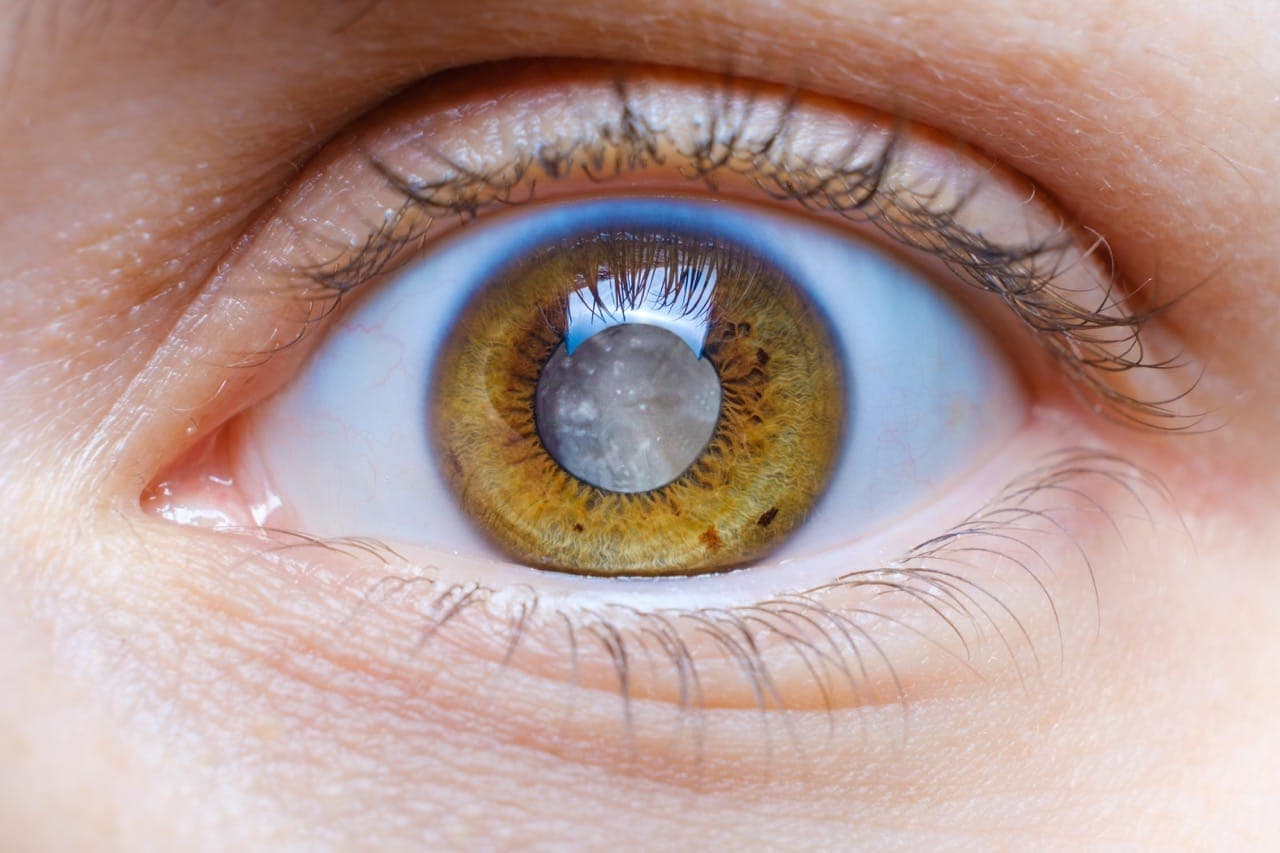
Why Fuchs' Dystrophy Causes Morning Blur and How We Treat It
Fuchs' endothelial dystrophy gradually destroys the cornea's pump cells, causing characteristic morning blur. Understanding the mechanism explains the symptoms and guides treatment decisions.
Considering treatment? Speak directly with Miss Menassa.
If you wake each morning with hazy, clouded vision that gradually clears as the day progresses, Fuchs' endothelial dystrophy may be the cause. This distinctive pattern—worst on waking, improving by mid-morning—is the hallmark of a condition affecting the innermost layer of the cornea. Understanding why this happens helps explain both the disease and the logic behind its treatment.
The Endothelium: Your Cornea's Pump System
The cornea must remain transparent for clear vision, yet it is constantly exposed to fluid from inside the eye. A single layer of specialised cells on the cornea's inner surface—the endothelium—works as a biological pump, continuously removing excess fluid to maintain corneal clarity. A healthy young adult has approximately 3,000 endothelial cells per square millimetre. Crucially, these cells do not regenerate; we are born with our lifetime supply, and the count naturally decreases with age.
In Fuchs' dystrophy, endothelial cells deteriorate and die prematurely, often forming abnormal excrescences called guttae on Descemet's membrane. As cell density falls, the remaining cells must work harder to maintain corneal clarity. Initially, they compensate by spreading to cover greater surface area. Eventually, the pump system becomes overwhelmed and can no longer keep the cornea clear.
Why Vision Is Worst in the Morning
During sleep, your eyelids are closed and no evaporation occurs from the corneal surface. Fluid accumulates in the corneal stroma overnight because the weakened endothelium cannot pump it out fast enough. You wake with a swollen, hazy cornea—as if looking through frosted glass. Once your eyes open, tear film evaporation assists fluid removal from the corneal surface, and the endothelial pump gradually catches up during the day. By afternoon, vision may be quite acceptable—until the cycle repeats the next morning.
As the disease progresses, the daytime clearing takes longer. Eventually, vision remains clouded throughout the day. In advanced cases, painful epithelial blisters (bullous keratopathy) may develop as the waterlogged cornea disrupts the surface epithelium, causing significant discomfort alongside visual loss.
Who Gets Fuchs' Dystrophy?
Fuchs' dystrophy is more common than many people realise, affecting roughly 4% of the population over 40 years of age in some studies. It has a genetic component—it tends to run in families—and is more common in women than men. The condition progresses slowly, often over decades, and many people with early guttae never develop symptoms significant enough to require treatment. However, those who do progress can find the condition profoundly disabling.
Treatment Options: Conservative
In early stages, hypertonic saline drops (sodium chloride 5%) can draw fluid from the cornea, accelerating the morning clearing process. Using a hairdryer held at arm's length to gently evaporate surface moisture is a surprisingly effective technique many patients find helpful on waking. These measures buy time and improve comfort but do not address the underlying cell loss.
Treatment Options: Surgical
When conservative management is no longer sufficient, surgical replacement of the diseased endothelium becomes necessary. DMEK (Descemet Membrane Endothelial Keratoplasty) is the gold standard—replacing only the 10-to-15-micron-thick endothelial layer while leaving the remaining 95% of your cornea intact. Visual recovery is typically rapid, with many patients achieving driving-standard vision within weeks. Rejection rates are low, and the procedure avoids the sutures, high astigmatism, and lengthy recovery associated with traditional full-thickness transplants.
For patients who also have cataracts—which is common in the age group affected by Fuchs' dystrophy—DMEK can be combined with cataract surgery in a single procedure, addressing both problems simultaneously.
When to Seek Assessment
If you recognise the pattern of morning blur, it is worth seeking specialist assessment sooner rather than later. Early diagnosis allows monitoring of cell density and planning of intervention at the optimal time—before vision deterioration significantly impacts your quality of life and before the cornea develops scarring that could limit the outcome of transplantation. Miss Menassa's fellowship training in corneal surgery at centres in Germany and Switzerland, where DMEK was pioneered, means she can offer the full spectrum of assessment and treatment, from conservative management through to advanced DMEK transplantation.

Written by
Miss Menassa
Consultant Ophthalmologist & Cornea Specialist at Menassa Vision
Learn more about Miss MenassaHave Questions About This Topic?
Book a consultation with Miss Menassa to discuss your concerns and explore your options.
Understand your eyes, at your own pace
Occasional, plain-English guidance on cataract, corneal and lens conditions — written by Miss Menassa. No jargon, unsubscribe anytime.
Related Articles
Continue exploring our expert insights on eye health
Dense Cataracts: Why Complex Cases Need Specialist Surgery
Dense, mature, or white cataracts present unique surgical challenges that demand specialist expertise. Understanding why these cases differ from routine cataract surgery helps you make informed decisions about your care.
DSAEK Surgery: What It Is, Recovery, and Long-Term Results
DSAEK is a partial-thickness corneal transplant that replaces diseased endothelial cells while preserving most of your natural cornea. This guide covers the procedure, recovery timeline, and what results to expect.

The Role of Biometry in Achieving Precise Cataract Surgery Outcomes
The success of cataract surgery depends heavily on measurements taken before you enter the operating theatre. Modern biometry uses laser interferometry and AI-enhanced formulae to calculate lens power with remarkable accuracy.