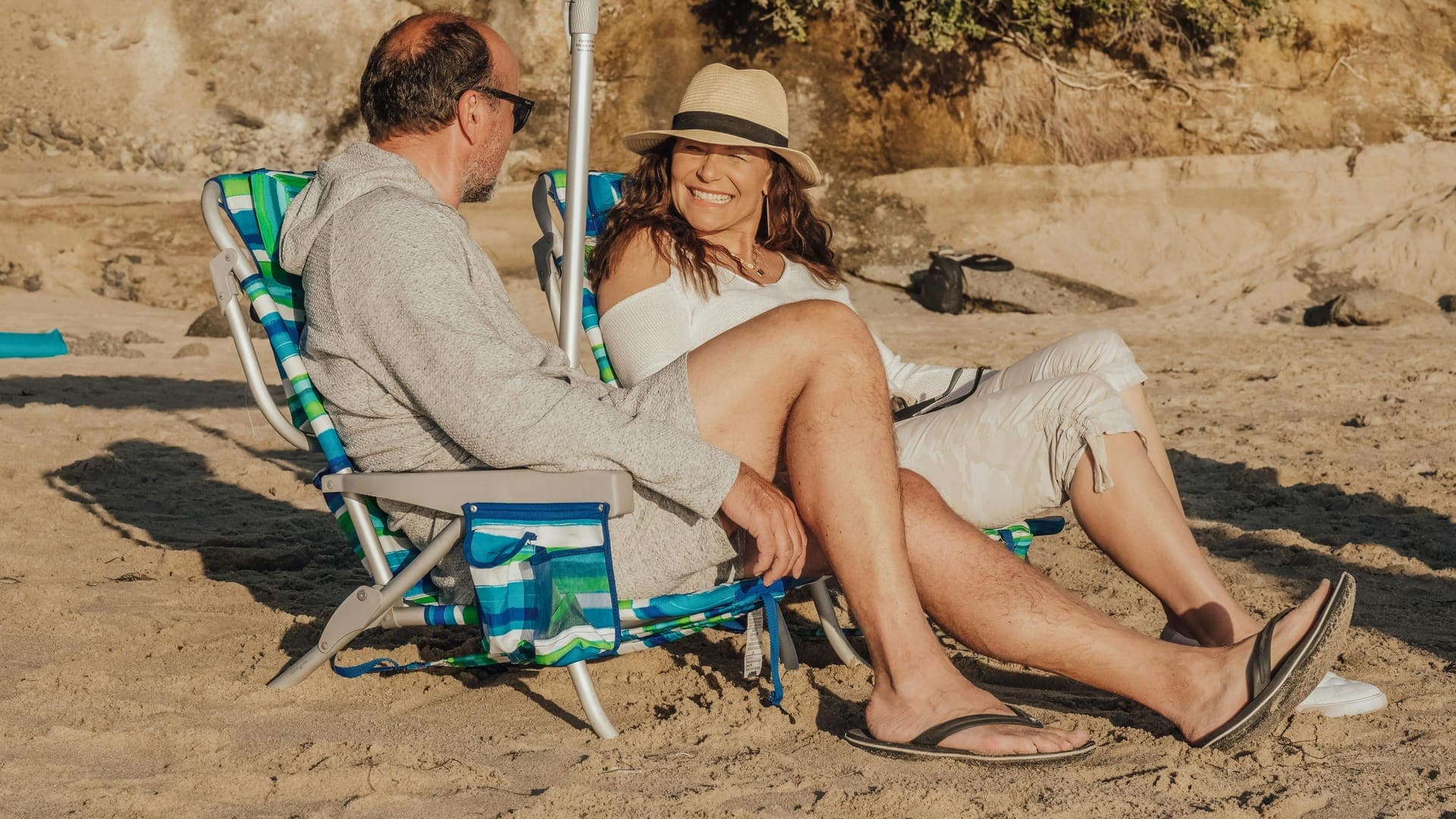
Walking with Confidence: How Better Vision Prevents Falls
Falls are the leading cause of injury in older adults, and poor vision is one of the most significant modifiable risk factors. Restoring clear sight through surgery can literally help you walk with confidence again.
Considering treatment? Speak directly with Miss Menassa.
Falls may seem an unlikely topic for an ophthalmology article, but the connection between vision and falls is direct, well-evidenced, and profoundly important. Poor vision is one of the leading modifiable risk factors for falls in older adults, and cataracts are one of the most common causes of reduced vision in this age group. The logic is straightforward: if you cannot see the kerb, the step, the rug edge, or the change in floor surface clearly, you are more likely to trip and fall. What is perhaps less widely appreciated is just how powerfully cataract surgery can reduce this risk and restore confidence in your physical independence.
The Evidence Is Clear
A landmark randomised controlled trial published in the Journal of the American Medical Association demonstrated that expedited first-eye cataract surgery reduced the rate of falls by 34% compared to a control group who experienced routine waiting times. Other population-based studies have shown that improving visual acuity by even two lines on a standard eye chart is associated with a measurable, clinically significant reduction in fall risk. A systematic review of 27 studies confirmed that visual impairment—particularly reduced contrast sensitivity, impaired depth perception, and restricted visual field—is independently associated with increased fall risk after adjusting for age, medication use, and other confounders.
The mechanisms are intuitive once understood. Cataracts impair contrast sensitivity—the ability to distinguish objects from their backgrounds—making steps, kerbs, and floor-level obstacles harder to detect, particularly in dim lighting. Depth perception suffers as the degraded image from the cataract eye prevents proper binocular fusion. Night vision deteriorates as the cloudy lens scatters light and reduces retinal illumination. These are precisely the visual functions most critical for safe mobility, and precisely the functions that cataract surgery most dramatically restores.
Falls at Home
It is not only outdoor falls that are affected by poor vision. The majority of falls in older adults actually occur at home—on stairs, in the bathroom, navigating between rooms at night, tripping over pets or household items. Dim lighting, reflective or uniform-coloured flooring, and the transition between different surfaces (carpet to tile, for example) all create hazards that are far more dangerous when contrast sensitivity and depth perception are compromised. A fall in the bathroom—with hard surfaces and confined spaces—is particularly likely to result in serious injury.
Beyond the Statistics: Confidence and Independence
The fear of falling can be almost as limiting as falling itself—a phenomenon clinicians call "fear of falling syndrome." Many older adults restrict their activities, avoid going out alone, decline social invitations, and become less physically active because they are afraid of losing their balance and sustaining a serious injury. This creates a vicious cycle: reduced physical activity leads to muscle weakness, deconditioning, and loss of balance reflexes, which further increases the actual risk of falling. Confidence and physical capability decline together.
Patients who have had cataract surgery frequently describe a transformation in their confidence on their feet that extends well beyond the measured improvement in visual acuity. "I stopped being afraid of the stairs." "I walk to the shops again instead of waiting for someone to drive me." "I went for a proper countryside walk for the first time in two years." "I took the grandchildren to the park by myself." These are not descriptions of seeing better—they are descriptions of regained independence, restored confidence, and a return to active, self-directed living.
Practical Visual Safety
Even after surgery, simple environmental adjustments support safe mobility and are worth implementing. Good lighting on stairs, in hallways, and in bathrooms. Contrasting colours on step edges and thresholds. Removal of loose rugs, trailing cables, and unnecessary clutter at floor level. Night lights in bedrooms, corridors, and bathrooms for night-time navigation. Non-slip mats in the bath and shower. These practical measures complement rather than replace the fundamental improvement in vision that surgery provides.
An Investment in Independence
A fall that results in a hip fracture can be genuinely life-altering—triggering a cascade of hospitalisation, major surgery, weeks of rehabilitation, loss of confidence, and sometimes permanent loss of independent living. The statistics are sobering: approximately 10% of older adults who sustain a hip fracture do not survive the following year. Cataract surgery, by contrast, is a 20-minute outpatient procedure with rapid recovery and an excellent safety profile.
When viewed through this lens, addressing cataracts before they contribute to a fall is not merely about seeing more clearly—it is about maintaining the independent, active, safe life you value. If you have noticed that unsteadiness, near-misses, or fear of falling are accompanying your declining vision, Miss Menassa can assess how much your visual impairment is contributing to the risk and what improvement surgery is likely to deliver.

Written by
Miss Menassa
Consultant Ophthalmologist & Cornea Specialist at Menassa Vision
Learn more about Miss MenassaHave Questions About This Topic?
Book a consultation with Miss Menassa to discuss your concerns and explore your options.
Understand your eyes, at your own pace
Occasional, plain-English guidance on cataract, corneal and lens conditions — written by Miss Menassa. No jargon, unsubscribe anytime.
Related Articles
Continue exploring our expert insights on eye health
Returning to Your Hobbies: Creative Pursuits After Eye Surgery
When vision declines, hobbies are often the first things quietly abandoned. Eye surgery can reignite the creative pursuits and pastimes that bring meaning and pleasure to your daily life.

The Joy of Grandparenting with Clear Vision
Grandparenting is built on small, precious moments—reading stories, watching school plays, exploring rockpools. When declining vision blurs these experiences, surgery can bring them back into sharp, joyful focus.

Confidence at Work: How Clearer Vision Transforms Professional Life
Declining vision does not just blur your eyesight—it erodes professional confidence. Patients who undergo eye surgery frequently describe a transformation in how they work, present, and engage with colleagues.